
The Birth of Death
A Guidebook to Paleolithic Art in the Caves of France
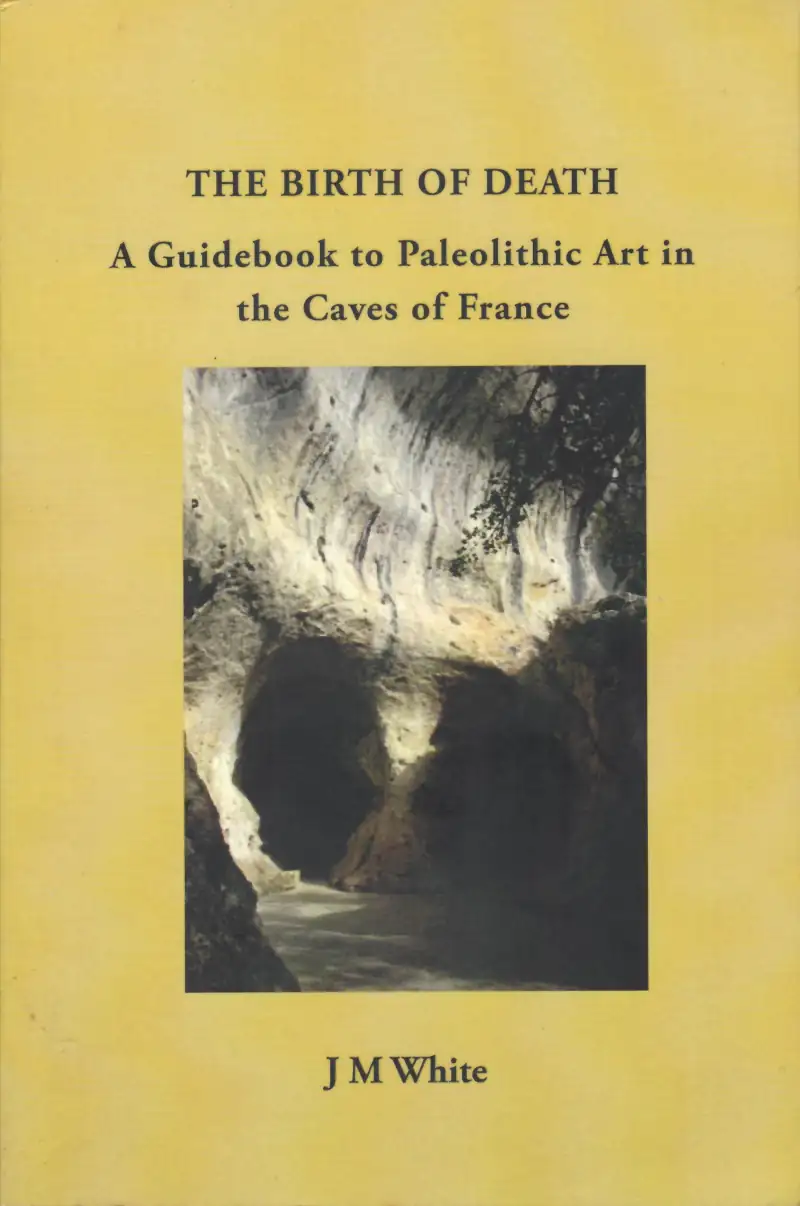
The Birth of Death:
A Guidebook to Paleolithic Art in the Caves of France
J. M. White wrote and published The Birth of Death in 2016 and was it published by Anomolaic Press, Brush Creek, TN, 2015
This book is available for purchase at Amazon.com.
The Birth of Death
The Birth of Death
This book is divided into two sections. The first part is a journey down the Vezere Valley visiting the most famous Paleolithic sites in southern France. The second part is an intellectual journey to discover the meaning and purpose of the art created by the first artists in the who brought art into the world.
The text examines the evolution of consciousness that created the conditions for the birth of art, catalogues the various art motifs they created and proposes new theories about the meaning of the artwork. The Vezere Valley, in southern France, is called the cradle of humanity. It was here that something happened in the evolution of human consciousness to create the conditions for the birth of art. Before this time there is no record of figurative art in the archaeological record.
Starting 40,000 years ago the hunter-gatherer bands in Europe began sculpting mammoth ivory and painting, using the subterranean cave walls as their canvas. The text examines the evolution of consciousness that created the conditions for the birth of art, catalogues the various art motifs they created and proposes new theories about the meaning of the artwork. The book is in two parts. The first is a journey down the Vezere Valley visiting the most famous Paleolithic sites in southern France. The second is an intellectual journey to discover the meaning and purpose of the art created by the first artists in the Paleolithic period.
I review the basic motifs that recur in the Paleolithic art and the various theories about who created it and why. It includes a description of the semi-nomadic hunter gatherer bands who lived in the Vezere Valley. I then show the relationship between the artist motifs and the belief in an afterlife among ancient people with the theory that the Paleolithic paintings were related, among other things, to the funerary practices of the culture that created the art. This is a new idea that has not yet appeared in the literature.
“Being in the caves conveys the sublime consolation of art. Its silent solace, reaching across the immensity of time, has a natural candor and a dream-like improbability. It feels like a mineshaft into a different dimension, like a mirror reflecting a different time and a different place. The art on the cave walls is a projection of an imagination too deliberate to be ignored. The artist captured something inherent in the human spirit, something that fatigues abstract thought and renders it impotent. There are mythic revelations hidden in the art. There is much to be learned, but what it is is still a mystery. It has a haunting illumination unbound by time or mental categories. It has a deep melodious sense of concentrated insight into something buried in the pre-conscious. It leaves us befuddled with an anguished curiosity and sensual wonder. It is a mystery play for which we are uninitiated. It is a powerful blow which is stunning. It is a mighty draught as if time has been fermenting in these underground cauldrons.”