
Finding the Lost Country
The Life of William Gay
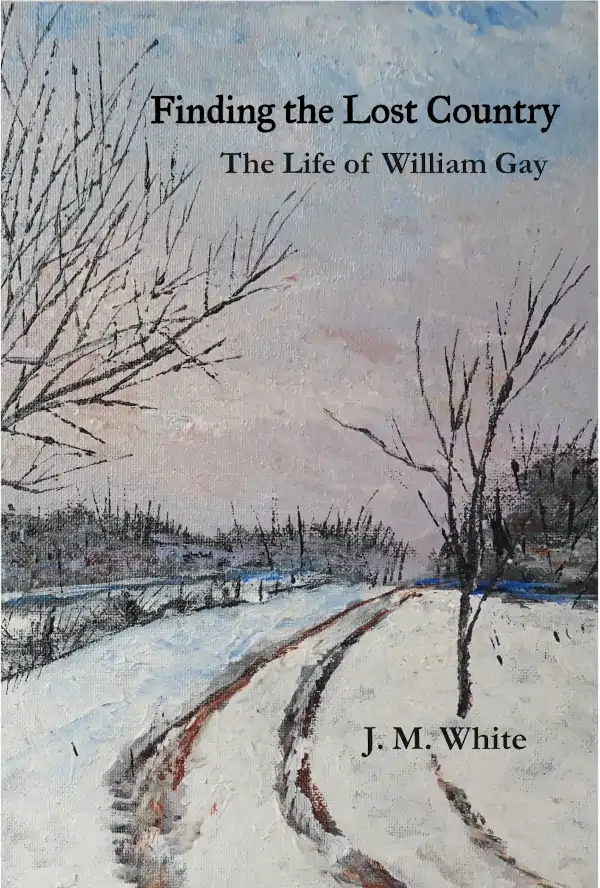
Finding the Lost Country
The Life of William Gay
J. M. White wrote and published Finding the Lost Country in 2025, Anomolaic Press, Brush Creek, TN.
Please read an excerpt, the preface and an interview of the author, J.M. White, by Dawn Major, below.
This book is available for purchase at Amazon.com.
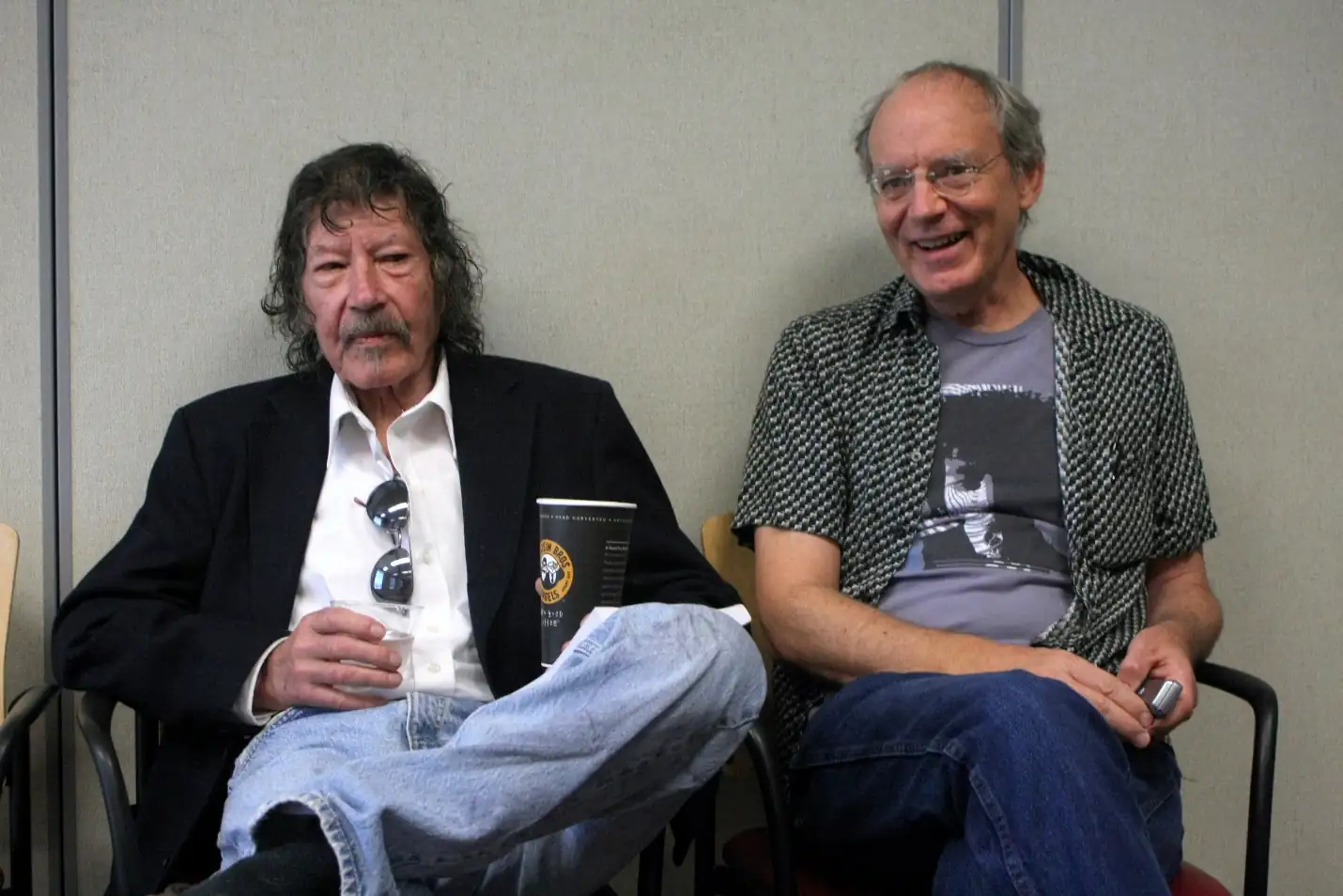
William Elbert Gay was born in Lewis County (TN) in 1939 and grew up in the rural South. William was raised in a sharecropper’s shack without electricity or running water. His father never owned a car or a house. He graduated from the Lewis County High School but was completely self-educated as both a writer and a painter. For years he studied the craft and art of writing and kept at his writing until his prose matched the aesthetic power and intensity of the great writers in the Southern literary tradition he admired and studied. He passed away in 2012 at age 71.
William Gay was born to be a writer. For as long as he could remember he was fascinated by the written word and wanted nothing other than to write. He faced incredible odds but there was simply nothing else that he wanted to do and nothing else that he would do. He lived a hardscrabble earthly life, rugged and simple. He served his art and let his art serve him. He was creating something original, something high energy, cut to the bone, coming out of the dark with an element of danger, exploding on the page. He wrote prose that is heartfelt and melancholy, imbued with beauty and a concern for all living things. In a world that didn’t seem to care, he was an earth angel singing from some imaginary corner of the universe. His life and the books he created are a master class in the art of writing.
William’s brother and his ex-wife both emphasized that much of William’s fiction was based on situations in his life. As I got to know the biographical details of his life and reread the novels and short stories, I began to see episodes in his fiction that were autobiographical and used them, paraphrased, in the biography. I changed the names and sometimes changed the tense structure of the sentences but the material in the biography that is in italics is lifted from William’s writing, paraphrased to transform it from the fictional mode to the biographical mode. Each of these paraphrased sections is footnoted to reference them to their sources in his books.
Preface
William Gay’s seventh grade teacher noticed that he was reading Zane Grey, Earle Stanley Gardner, Mickey Spillane and Erskine Caldwell and told him,
You are all width and no depth.
The next day the teacher presented him with the Modern Library edition of Thomas Wolfe’s Look Homeward, Angel. Read this and tell me what you think. This is a young man’s book. If you’ll promise to read it, it’s yours. It’s worth a boxcar load of that junk you’ve been reading.
When William got home he put the book on the table beside a kerosene lamp and by the yellow glow of the lamplight he read:
…this book was written in innocence and nakedness of spirit, and the writer’s main concern was to give fulness, life, and intensity to the actions and people in the book he was creating….we are the sum of all the moments of our lives…and every moment is a window on all time – all that is ours is in everyone: we cannot escape or conceal it. If the writer has used the clay of life, he has only used what all must, what none can keep from using. Fiction is not fact, but fiction is fact selected and understood, fiction is fact arranged and charged with purpose…we seek the great forgotten language, the lost lane-end into heaven, a stone, a leaf, an unfound door.…O lost, and by the wind grieved, ghost, come back again. (p. xx LHA)
Wolfe’s elegiac words were an epiphany, he felt an energy go through him that was electrifying. He knew at that moment that it was his destiny to be a writer. He continued to read until his mother yelled at him to blow out the lamp. Excitement coursed through him as he lay awake the entire night waiting for the first light so he could continue reading. If it is possible that a book can change your life, that book changed his. It sharpened everything around him and brought his life into focus and pointed it toward a purpose; Wolfe’s prose set the direction for his life and he never wavered.
William knew from that moment that he wanted to be a writer. To him it was an exalted calling, it was the noblest thing you could do. He was stunned by the power of Wolfe’s language. The book was intensely alive. The characters walked and talked and lived their lives and they would not abide the page. The sense of utter “October aloneness” expressed in Wolfe’s rhapsodic prosody stirred him in his depths. The death of Ben Gant was the most powerful thing he had ever read. Wolfe took the lives of ordinary people and made them transcendent.
William immediately set out to learn to write with the startling insight and poetic language that Wolfe had mastered. That was what he thought then and years later it never changed. Wolfe’s novel raised a curtain on the power of the word. It articulated William’s compulsion to write and made it possible to believe that the stuff of life could, by some strange alchemy, be transmuted on the page. William was totally absorbed in Wolfe’s fiction. He felt Wolfe whispering to him in the night, Wolfe’s soaring incantatory rhetoric was like a narcotic. He was transfixed by Wolfe’s language; it was the first time he realized that language can transport you, can take you outside yourself and that the sum of words can mean far more than the individual words alone. Suddenly words like “a stone, a leaf, an unfound door” took on a meaning he didn’t know could exist, a meaning he wanted to find. Wolfe’s landscape was more tangible to William than his own backyard and the characters were as real as the people in his day-to-day life.
As soon as he read the 544 pages of Look Homeward, Angel, William went back to the beginning and started over again, and before his fourteenth birthday, he read it again from cover to cover. He found in Eugene Gant a version of himself. William fell in love with the experience of the words, their rhythm, their cadence, their flow. Those feelings drove him to an addiction to the masterworks of Southern literature. When he set his own pen to paper, he wanted nothing more than to match them, word for word, in power and beauty. He was stunned by the power inherent in language and never got over it. William’s discovery of Wolfe’s evocative and poetic prose marked the beginning of his writing career.
William Gay was born to be a writer. For as long as he could remember he was fascinated by the written word and wanted nothing other than to write. He faced incredible odds but there was simply nothing else that he wanted to do and nothing else that he would do. From that time on William did whatever he had to do to figure out how to create prose that embodied the aesthetic intensity he first encountered in the language of Thomas Wolfe.
Excerpt from Finding the Lost Country: The Life of William Gay
As children William and his little brother had a path through the woods from their house to their grandparents’ home. As they walked between the two houses, William would make up stories and tell them to Cody. He had a fascination with Westerns and would tell Cody stories about the adventures of the Cowboy Kid. When they got to their grandparents’ house they would come through the back door into the long narrow kitchen, enthralled by the myriad smells of the kitchen, the coffee and cloves and cinnamon, the heavy fruity odor of basketed apples and the faintly sour smell of dried peaches and other odors, rich and dark and mysterious. It was the odor of time itself, of days the old couple had stacked into years as carefully as a mason lays one stone atop another.
Their grandmother claimed Cherokee blood and William studied her and had no reason to doubt it. The thin gray hair pulled tightly into a bun behind her head had once been as black as shoe polish, her eyes fiercely alive, her tiny body barely containing the energy that animated her every waking moment. With her leathery face and beaked nose she looked less like an Indian woman than some old chief, the repository of the summed knowledge of all his forebearers had passed on by the flickering light of council fires. (p. 32 PN)
By the time William was in second grade his two brothers had been born, Cody had been born in 1943 and then Bradley in 1946. The schoolhouse was a simple one-room affair. It didn’t have electricity or running water and had two outhouses by the creek. The schoolhouse served all the families living on Grinder Creek Road. There were sixteen students in the one room with little more than the desks and a wood-burning heater. The schoolteacher knew all the kids and had helped to deliver many of them, including William. They were learning how to read and write and that was about it. The rest of the time they could play outside. They didn’t have school buses; all the kids walked to school. William lived just down the creek from the schoolhouse, so it was an easy matter walking to school.
While they were at school, if a wagon drove by, all the kids would run to the window and watch. It was the only show in town and all the kids would stand at the window and stare and wonder who it was and speculate about what they were up to. There was a girl in class named Berlene and when she didn’t know a word in her schoolbook she would ask William. Once she pointed to the word “smoke” and William, in a mischievous mood, told her it was the word “monkey”. Later that day the teacher asked Berlene to read from her book and she talked about the monkeys coming out of the chimney.
Because William was such a dedicated reader, they let him use the library before he got to high school. He had a special feeling in the library. On one visit the librarian gave him an old beat-up copy of Huck Finn that had the cover torn off. The library was discarding it and she gave it to William. It was the first book he loved so much he rationed the pages when he was nearing the end, allowing himself ten pages a day. The book thrilled and amazed him. It was as if he was there with Jim and Huck on the sunrimpled Mississippi. He could almost smell the hot torpor of the river and see the country sliding past, until he was hopelessly snared by Twain, forced to seek out the book in surreptitious moments during the day. He was enthralled by the wild humor of Pap’s drunken monologues, the doings of the Duke and the King’s Royal Nonesuch, the moment of revelation when Huck says,
Alright, I’ll go to hell then.
In later years he felt like the book falls off toward the end once Tom Sawyer shows up, but it’s still a great book. Hemingway said that all American writing came from Huckleberry Finn. Even as an adult he saw no reason to dispute that. (p. 200-201 SFTA)
He also found an old copy of Tarzan of the Apes. These were some of his first books and he treasured them and read them over and over. He would read anything he could get his hands on. It didn’t matter if it was a comic book, a magazine or a book. In the fourth grade he got a cheap paperback copy of a used dictionary. He started reading on the first page and immediately loved it. He sat up at night reading it page after page, A to Z, until he had read the whole thing and then started over again, memorizing words that he didn’t know but somehow knew that he wanted to use. He would spend his lunch money buying books at the local drugstore where they had a revolving rack of paperbacks. He was reading all the popular writers who showed up there like Earle Stanley Gardner, Rex Stout, Nero Wolfe and Ross Macdonald, along with Zane Grey.
At school William stayed to himself. The teachers hardly knew he was there, he wasn’t disruptive and didn’t play sports. His love of reading was apparent to his teachers. In the seventh grade he had a teacher named William Johnson who realized that he had a special talent and started working with him. Mr. Johnson could see William beginning to blossom. Mr. Johnson had a literary side, and he began to show William some of the books that he would fall in love with. He was a patient, dedicated teacher who inspired William and opened doors for him.
William got so inspired after Mr. Johnson gave him a copy of Look Homeward, Angel that he went to the local drugstore and got a three-ring binder filled with lined pages. At home the family had no interest in pens or paper, but William found an old refillable fountain pen. It had a lever on the side that, when you put the point of the pen in an inkwell and lifted the lever it drew ink up into the bladder in the pen and you could write until you emptied the bladder and had to return to the inkwell. The only problem was he had no ink and no place to find any.
There were walnut trees growing by the side of the creek in front of the house and he took the hulls of the walnut and soaked them until the water took up a dark brown stain. He sieved the dark stained water through a cloth and found it made a good substitute for ink. He loaded the pen and posed it at the top of the first blank page and wrote the word, Novel, below that he wrote East of the Sun, West of the Moon. It gave him a great sense of satisfaction as he watched the words form on the page. He wrote,
In a scant few minutes a column of smoke lifted from the butte to the north. The blue smoke rose slowly in the warm air and hung motionless. Then another small cloud arose following the last. For a moment he was struck dumb. Then he turned and stared at his partner. His voice shook slightly as he spoke, ‘Do you know what that means? Apache!’ (Unpublished, William Gay Archive)
He continued writing the adventures of the Cowboy Kid that he had been telling his brother Cody on their walks. He eventually filled the notebook on one side of the page. When he got to the end, he turned it over and wrote on the back side of the paper and filled those pages until every page was filled. It was a habit he maintained for the rest of his life, filling one notebook after another on both sides of the page. It took him a couple of years to fill the notebook and he put a date at the end, 1956. He cherished that old notebook and carried it with him through all the moves he made and had it in his papers when he died.
Growing up in rural Tennessee knowing he was going to be a writer, he was especially interested in authors who were chronicling the American South. Caldwell and some of the others seemed to be writing about shoddy caricatures devised solely to titillate and sell books.
He came upon Faulkner in his early teens. Someone who recognized William’s love of reading had given him a bag of paperbacks, most of which had lurid covers that enticed you inside. There was a copy of Sanctuary in the bottom of the bag with the cover depicting a young woman, presumably Temple Drake, sprawled backward on a pile of hay. Her clothes partially ripped open and a man looming in the foreground, his back to the reader’s eyes. His intentions seem clear. William could see that the genius of these books was that, while people read them for the sex scenes promised by the covers, reading them actually gave them an education in literature. The ghosts of Anse Bundren and the other characters in Faulkner’s novels gave him the template and became like echoes that showed up in the work of many of the writers he was reading, and later in his own. The wry comments and ironic humor of storekeepers and country doctors that Faulkner seems to have invented and patented was immediately recognizable, William knew people who talked and acted like the characters in Faulkner’s books. (p. 210-2 SFTA)
William could see that if Faulkner was able to create this panoramic vision of his little postage stamp of earth, that he could do the same with the area where he was growing up. Faulkner had named his county Yoknapatawpha and its county seat Jefferson, which was his stand-in for Oxford, Mississippi. Stories Faulkner told about the residents of Yoknapatawpha took on the quality of myth, where real events are turned to legend by the alchemy of their constant retelling. The characters were able to take the world as it is and accept it on its own terms with a stoic bemusement. Misfortune and ill luck are recounted with an almost bland equanimity. Fate is treated with a kind of rueful acceptance. (p. 213 SFTA)
This resonated with William. It was exactly the way he felt about life, or at least the way he wanted to feel about life, and the way he trained himself to feel. He felt like when the tab is added up for the outrage and folly of most lives, the sum will be enormous. It is indeed hard to pay the toll, impossible, and that impossibility was simply the circumstances of his life and, now that he knew it, he wanted nothing more than to express it in his writing.
It was only when he started reading Faulkner that he found a depiction of country people who seemed as real as the neighbors and family members he was growing up around. Faulkner never stooped to characterize them, Faulkner’s characters felt like actual people. They were like the people around him, he felt like he had known people like them, heard their voices. Though Faulkner wrote at times about depraved people doing depraved things, he never denied his characters their basic humanity. He wasn’t condescending to them, and he always allowed them whatever modicum of dignity they were entitled to. His humor and compassion were always in evidence, and it set the bar for William. (p. 207-208 SFTA)
When he read As I Lay Dying he thought it was Faulkner’s most perfect novel. He read every word of every one of Faulkner’s books. He was enthralled with The Sound and the Fury, but he read As I Lay Dying over and over and would return to it every year, rereading it for the mythic sweep of the story and the sheer beauty of the language. William recognized moments in Faulkner when his rhetoric evokes Shakespeare, or Homer, or the Old Testament. And yet he managed to do it without his narrators ever stepping out of character as they spoke or thought in letter-perfect dialogue that is always true to who they are.
He was most happy when he was in the barn loft by himself, writing in a notebook. Other times he would go out in the fields around the house and just sit and read a book. There was a place he liked where the woods ended abruptly, and the fields began. He could sit under the thick viny undergrowth awash with bird-song, feeling lazy in the sun. He marveled at how new grass shades the rolling slopes with the palest of green. He watched blackbirds burnished by the noon sun gleaming like silvered contrivances. He worked on his first stories for a long time. He recognized that the writing wasn’t any good, but something told him that he would have to do a lot of bad writing before he could do any good writing. Even then he started out using his own brand of punctuation. He quickly came to the conclusion that writers should be allowed no exclamation points, three semi-colons, no quotation marks, and very few commas for a lifetime. He wrote and wrote and wanted nothing else but to sit and write.
Introduction:
Southern author, William Gay, hardly needs an introduction; he remains a valued figure in the world of Southern writing. What may need an introduction, however, is the effort devoted to preserving his legacy. A considerable portion of that work was taken up by Michael White, who has now chronicled Gay’s life in the biography, Finding the Lost Country: The Life of William Gay, by J. M. White. Gay’s legacy lives on not only through his works but also through the story that unfolded after his passing in 2012. I am honored to interview Michael White and to offer WELL READ readers a preview of the forthcoming biography.
Dawn Major: Readers and fans of William Gay not only get to learn more about William’s life and writing background, but also get to read passages from William’s memoirs, short stories, and novels. Would you describe your process and why you decided you write the biography in his manner?
Michael White: William’s brother and his ex-wife both emphasized that much of William’s fiction was based on situations in his life. As I got to know the biographical details of his life and reread the novels and short stories, I began to see episodes in his fiction that were autobiographical and used them, paraphrased, in the biography. I changed the names and sometimes changed the tense structure of the sentences but the material in the biography that is in italics is lifted from William’s writing, paraphrased to transform it from the fictional mode to the biographical mode. Each of these paraphrased sections is footnoted to reference them to their source in his books.
As the story of his life unfolds, I included excerpts from his books to show what, and how, he was writing at each phase of his life. These quotes are indented and footnoted. These include materials from the William Gay archives that have not been previously published.
DM: In 2017 when I was writing my critical thesis on William and interviewed you at the time you mentioned you planned to write his biography. Eight years later you did it. While William’s life ended in 2012, his legacy continues. Can you describe some of the ways in which you and Team Gay have kept his legacy alive?
MW: It has been an incredible collaborative project that has resulted in the posthumous publication of four novels and a short story collection. The great majority of the manuscripts were handwritten in William’s scrawl, he didn’t cross his t’s or dot his i’s so we had to learn to decipher his handwriting. Many thanks are due to Susan McDonald and Sheila Kennedy who did the great bulk of the typing. Once we got everything typed Susan and Sheila helped with the editing and then Lamont Ingalls and Paul Nitsche came on board and helped immensely with every aspect of preparing the manuscript. Then as more time passed George Dilworth and Brodie Lowe, Randy Mackin, Matt Snope and Jon Sokol all contributed in one way or another. And I have to say that Dawn has been a long-standing member of the team. This team has promoted William’s work tirelessly. Paul Nitsche set up a very helpful webpage and Dawn and I have honored William’s legacy as a painter with a great month-long gallery show in Decatur Georgia and made presentations at the Lost Southern Voices conference.
DM: How did you structure the biography and what were your primary sources?
MW: William died in 2012 and during the next few years I was working with a nonprofit organization in Hohenwald and was in and out of town nearly every month. Any time I was in Lewis County I would go by and visit with the family members. I said very early on that I wanted to write a biography of William and they got used to me sitting around with a notebook on my knees writing while they were talking. They had seen William with a notebook on his knees writing for many years so I guess they weren’t too surprised. I got to visit repeatedly with his ex-wife and his brother. Cody, his younger brother, has been a great help sharing stories about growing up together and reading the manuscript. I knew all William’s children and they all helped with memories of their childhood and sharing pictures. Then I was really lucky to find “Tex” who was William’s best friend in the Navy and he shared many stories of their times together on Naval destroyers off the coast of Vietnam. Then William’s literary friends, like Sonny Brewer and Ron Rash, have shared a lot of stories of being on the literary circuit with William.
DM: You were William’s friend and already knew a good deal about his background, but were there any big surprises of which you were unaware? No spoiler alerts, but maybe a teaser.
MW: Yes, it was shocking to learn about his Navy experience. Even as a child William didn’t want to have anything to do with a gun or hunting and wouldn’t even kill a bug. He seemed to have a natural reverence for all life. When he went in the Navy they gave everyone a basic IQ test and William scored through the roof and they trained him to work with the very early computers they were using to aim the damn eight-inch guns on the boat. He ended up sitting in a little room deep in the bowels of the ship feeding data into the computer which gave him back the coordinates where they should aim the guns so he would set the guns and then push a trigger to fire the guns. When the guns fired it shook the whole ship and the paint would flake off the ceiling and rain down. They were off the coast of Vietnam providing cover for the Marines and Army guys who were in combat and they would get daily reports of the number of people killed and villages destroyed. I have wondered how William was able to handle that and he was definitely ready to get out after serving his four years. And then the stories of his sexual adventures during the Navy years are quite wild.
DM: It never seems to quite end when it comes to William Gay. I know there’s some news about future publications. Would you care to share what fans can look forward to?
MW: It’s been a long odyssey but this ride isn’t over yet. William was a remarkable person and a remarkable writer so it seems very possible that he will have a legacy and could find a place in the canon of American literature. William started writing as a teenager and never stopped. He wrote his first novel at age twenty-five and it has survived. It is scheduled for publication in 2026. There is also a collection of short stories that he wrote while he was in the Navy and soon after he got out. But all this material is his “early works” while he was evolving his style. All this material dates from the 1960s and by the late 1970s his style had matured and he was writing at the top of his game. Ironically it wasn’t until 1998 that anything got published and fame followed quickly on its heels. William was a painter as well as a writer, painted all his life, primarily landscapes, so it would be great to have an art book someday.
DM: It’s been almost thirteen years since William passed away. How does it feel to finally put the biography out now?
MW: As a writer I typically have several projects in various stages of completion and as one of them gets close to the finish line it gets more attention. It feels great to get this biography in print, these things take many years to research and write. This was my fourth biography so I enjoy this kind of writing and it seems like a natural outgrowth of studying the works of the great writers and digging into their lives. I like to provide a lot of secondary information as well and this biography includes a series of appendices that include an interview with William, his correspondence with Cormac McCarthy and of course a bunch of pictures, and then a few examples of his unpublished prose from the archive, and a bibliography.
DM: On behalf of myself and WELL READ Magazine thank you for the interview and also for your dedication to preserving William Gay’s work. We wish you all the best with the biography and future projects.
Praise for Finding The Lost Country: The Life of William Gay
“Some folks dwell in the shadow realms of the creative imagination, where synchronicity is as common as day and night, as sunlight and moonglow. William Gay and J.M. White are anomalies. There is no rational explaining of their lives, of their works. The self educated William Gay became a master of the Southern Gothic novel. The erudite J.M White did graduate study in Phenomenology at Duquesne University, holds an M.A. in philosophy from Vanderbilt, and is the author of eighteen books of poetry, essays, and biographies. The story of how Gay and White became friends and then White discovered, edited and published Gay’s lost manuscripts is real literary magic, a thing of mysterious beauty. FINDING THE LOST COUNTRY: The Life of William Gay by J.M. White, written in an accessible conversational style, is storytelling at its best, a gift, a masterpiece.”
– Ron Whitehead, U.S. National Lifetime Beat Poet Laureate
William Gay is one of this century’s greatest American writers and Michael White has done Gay’s enduring legacy a great service in this outstanding biography.
–Ron Rash, New York Times bestselling novelist